
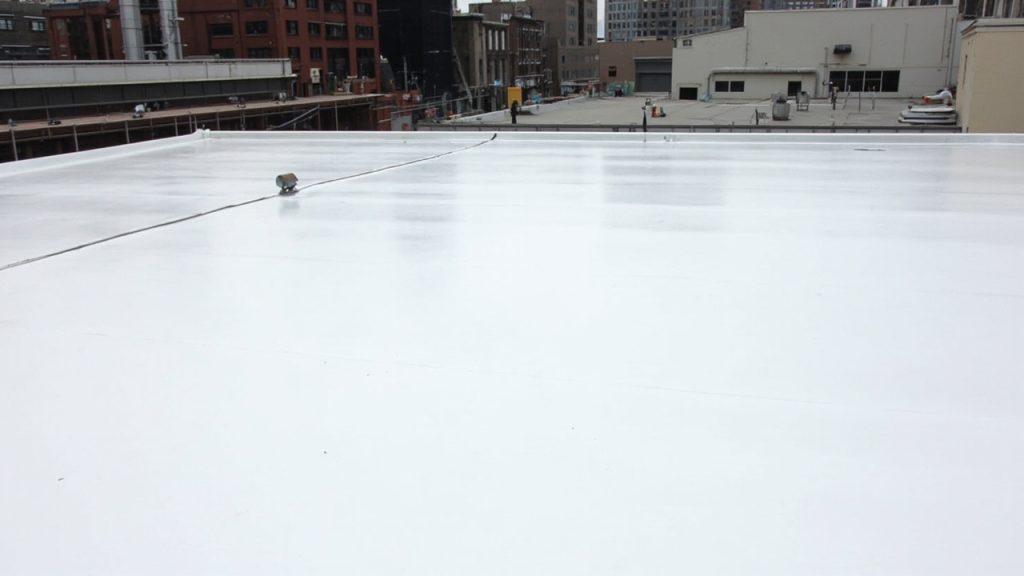
Flat roofs dominate North Loop commercial districts. These industrial lofts, modern condominiums, and converted warehouses depend on modern membrane systems to survive Minneapolis winters and summer hailstorms. A quality flat roof installation protects your building envelope while managing the extreme temperature swings that break inferior systems.
Heavy snow loads stress your flat roof system, commonly exceeding 40 pounds per square foot during Minnesota’s heavy precipitation seasons. The freeze-thaw cycles that characterize the Upper Midwest stress every seam, joint, and penetration. This is not generic roofing territory. Your North Loop building requires engineering that acknowledges local climate realities.
North Loop Flat Roofs Face Unique Climate Challenges
The North Loop sits directly south of Northeast Minneapolis, with both neighborhoods packed with flat-roofed structures built during the industrial boom. Properties along Hennepin Avenue and near the Stone Arch Bridge area contain the highest concentration of these membrane-dependent buildings. These structures share common vulnerabilities because they were designed for durability, not necessarily for the climate extremes facing owners today.
Minneapolis recorded a record winter in recent years with snow accumulation that tested every roof system in the city. Flat roofs experience standing water differently than pitched roofs. Heavy precipitation creates ponding water that sits on your membrane surface, adding weight and stress to joints. When temperatures drop to minus 20 degrees Fahrenheit, that same water expands as ice, forcing thermal movement that cracks weak membranes.
Ice dam formation creates equally problematic conditions. Heat from poorly ventilated buildings melts snow on the roof surface. That meltwater runs to the edges, refreezes, and creates an ice dam that prevents drainage. On flat roofs, this trapped water penetrates seams and flashings.
Your North Loop building likely has historical significance or architectural constraints. Properties within the North Loop Historic District often feature inadequate insulation in their original construction, compounding ice dam risk. Modern flat roofing systems must address these realities through proper drainage design, thermal management, and membrane selection.
TPO Membranes for Minneapolis Summer Heat and Expansion
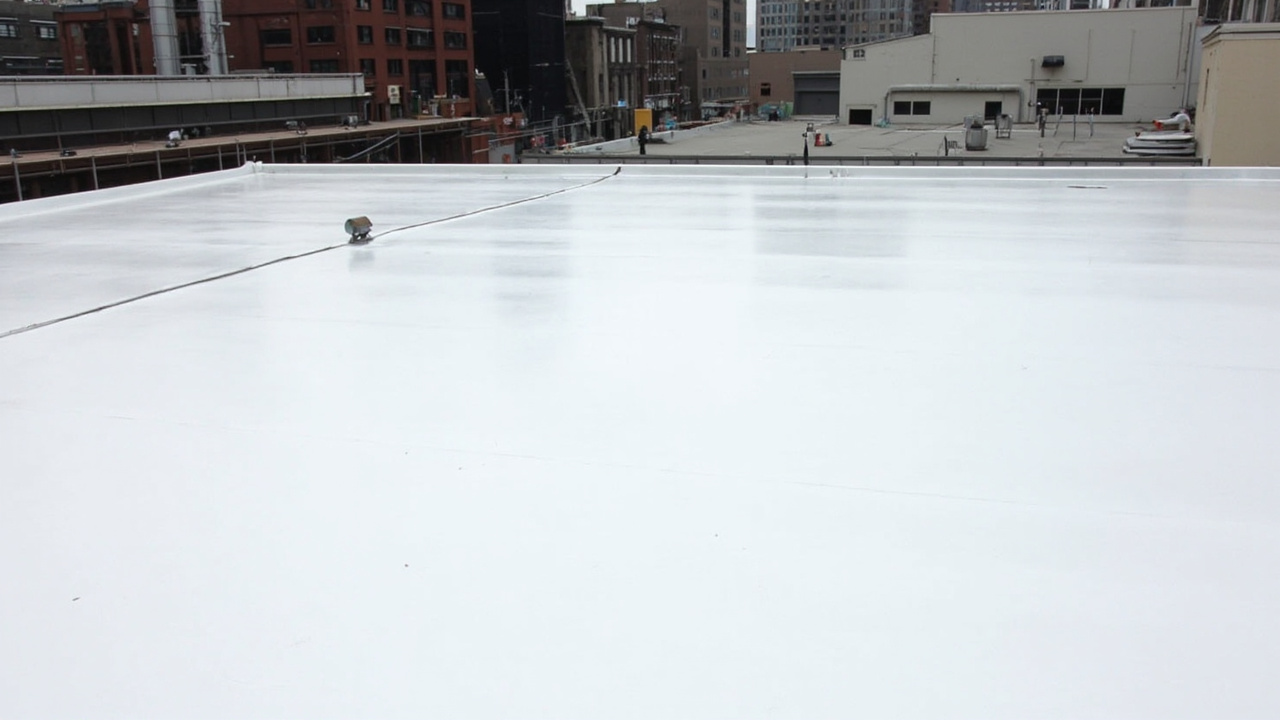
TPO (Thermoplastic Polyolefin) is a single-ply membrane manufactured from polypropylene and ethylene propylene rubber. It became the dominant flat roofing choice across Minneapolis because it performs under our specific climate stress.
TPO reflects 75 to 85 percent of the sun’s infrared energy. This reflectance lowers roof surface temperatures by 30 to 50 degrees Fahrenheit compared to dark membranes. Your building stays cooler in summer, reducing air conditioning costs by 10 to 15 percent depending on insulation quality.
The membrane handles thermal expansion exceptionally well. TPO stretches and contracts with temperature swings without cracking. Minneapolis experiences temperature changes of 40 to 60 degrees Fahrenheit from day to night, especially during spring and fall. TPO accommodates this movement through seam design and membrane flexibility.
Installation requires heat-welded seams rather than adhesive application. This approach creates a monolithic surface where the membrane itself bonds to itself, eliminating seam failures caused by glue deterioration. Your technician uses a hot-air welding gun to fuse adjacent membrane sections with 100 percent overlap. This produces a watertight seam stronger than the membrane itself.
TPO typically lasts 20 to 25 years in Minneapolis climates when properly installed and maintained. The membrane resists UV degradation better than asphalt-based alternatives. Maintenance requirements are straightforward. Annual inspections catch small punctures or seam separations before they become leaks.
EPDM Rubber Roofing for Long-Term Durability
EPDM (Ethylene Propylene Diene Monomer) is a synthetic rubber that has protected Minneapolis roofs since the 1970s. It remains popular because it outperforms expectations in cold climates.
The membrane tolerates temperature extremes from minus 40 degrees Fahrenheit to 180 degrees Fahrenheit. Your EPDM roof experiences this full range during a typical Minnesota year. Winter temperatures drop to minus 20 while summer roof surfaces reach 140 to 160 degrees under direct sun. EPDM stretches and contracts through these cycles without brittleness or cracking.
EPDM manufacturers can produce a single large sheet when possible. North Loop buildings up to 10,000 square feet can often receive one continuous membrane without seams. This eliminates the primary failure point in flat roofing systems. When seams are necessary, technicians use liquid-applied sealants or tape-based approaches that bond rubber to rubber.
The material is inherently resistant to ozone and UV radiation. Minneapolis summers bring intense sun exposure. EPDM does not degrade from this exposure like older asphalt felts or built-up tar roofs. Your building envelope remains watertight without costly coatings or additives.
EPDM typically lasts 30 to 40 years when installed properly. This makes it the longest-lasting option for flat roofs in Minneapolis. While initial costs are higher than TPO, the extended lifespan and reduced maintenance create superior value over the building’s lifecycle.
One limitation exists. Black EPDM absorbs more solar radiation than TPO, raising roof surface temperatures. This increases cooling costs by 5 to 10 percent. White EPDM is available but commands a premium price. Commercial property managers often accept the energy trade-off for the durability advantage.
PVC Membranes for Chemical and Physical Resistance
PVC (Polyvinyl Chloride) is a third option for Minneapolis flat roofs, particularly where rooftop equipment or specialized uses demand exceptional durability.
PVC resists harsh chemicals, oils, and animal waste. Rooftop HVAC systems may leak refrigerant, grease, or condensate oils. PVC maintains integrity where TPO or EPDM would degrade. This makes PVC ideal for North Loop properties with complex rooftop mechanical systems.
The membrane uses chemical-based adhesives for seam bonding, unlike TPO heat-welding or EPDM liquid sealants. This approach creates permanent bonds but requires skilled installation. Poor workmanship during adhesive application results in seam failures.
PVC is more rigid than EPDM or TPO. This reduces its stretch capacity during thermal movement. Minneapolis freeze-thaw cycles place greater stress on PVC seams than on rubber membranes. PVC performs better in stable climates. In Minnesota, it requires wider seam overlaps and more frequent sealing maintenance.
Expected lifespan is 20 to 30 years with proper maintenance. This falls between TPO and EPDM performance. Use PVC when specific rooftop conditions demand chemical resistance. Do not install PVC simply because it costs less than EPDM or lasts longer than TPO. Membrane selection must match your building’s actual needs.
| Membrane Type | Lifespan in Minneapolis | Installation Method | UV Resistance | Cold Temperature Performance |
|---|---|---|---|---|
| TPO | 20-25 years | Heat welded seams | Excellent | Excellent |
| EPDM | 30-40 years | Liquid sealant or tape | Excellent | Superior |
| PVC | 20-30 years | Chemical adhesive | Very good | Good |
Flat Roof Drainage Systems That Prevent Ponding Water
Water management separates successful North Loop flat roofs from failed installations. Your membrane protects the building only if water moves off the surface quickly.
Internal drain systems collect water from roof depressions and direct it through pipes to ground-level drainage. These drains require careful placement. They must sit at the lowest points of the roof while avoiding membrane penetrations that create leaks.
Scuppers are alternative drainage openings built into the parapet walls. Water flows over the scupper edge and down the exterior wall to ground drainage. Scuppers work well on buildings without internal plumbing, common in historic North Loop conversions like the renovated warehouse lofts along Stone Arch Bridge.
Gutter and downspout systems manage sheet flow along roof edges. The gutter must slope slightly toward downspouts. Minneapolis snow loading can exceed gutter capacity during heavy precipitation. Undersized gutters cause water to cascade over edges, damaging fascia and creating ice dams at ground level.
Modern flat roof design incorporates minimal slope. Building codes in Hennepin County require at least one-quarter inch of slope per foot of roof. This gentle pitch, combined with proper drainage, prevents ponding water.
During the design phase, your contractor maps all roof penetrations, HVAC equipment locations, and drainage points. The membrane installation follows this plan exactly. Every seam routes water toward drains or scuppers. Thermal movement is anticipated, with flexibility built into membrane placement around fixed equipment.
Snow Load Calculations for North Loop Structures
Minneapolis snow loads are calculated by the Minnesota State Building Code. The ground snow load for Hennepin County is 50 pounds per square foot. Roof slope, thermal factors, and exposure determine the final design load.
Flat roofs experience higher snow loads than pitched roofs because snow does not slide off. A flat roof in downtown Minneapolis must support the full calculated load without deflection.
Structural engineers calculate the roof system’s load capacity. This includes the membrane weight (typically 1 to 1.5 pounds per square foot), insulation weight (0.5 to 1.5 pounds per square foot depending on R-value), decking, and mechanical attachments.
Your North Loop building must have sufficient framing to support these loads. Older warehouse conversions sometimes have marginal capacity. A structural assessment identifies whether additional bracing is needed before installing new roofing.
Snow removal becomes necessary when accumulated weight approaches structural limits. Property managers in North Loop budget for periodic snow removal during heavy winters. This cost is often lower than upgrading structural framing.
Ice Dam Prevention on Low-Slope Roofs
Ice dams form when heat escapes through the roof, melting snow from underneath. The meltwater runs to the cold edges, where it refreezes and blocks drainage.
Prevention requires three strategies working together. First, attic insulation blocks heat transfer to the roof surface. Minnesota State Building Code Chapter 1300 requires R-49 insulation for residential attics. Commercial buildings require similar thermal resistance.
Second, ventilation removes heat that escapes despite insulation. Soffit and ridge vents create airflow that keeps roof surfaces cold. The building code specifies ventilation-to-square-footage ratios to ensure adequate air movement. Blocked or insufficient vents guarantee ice dam problems.
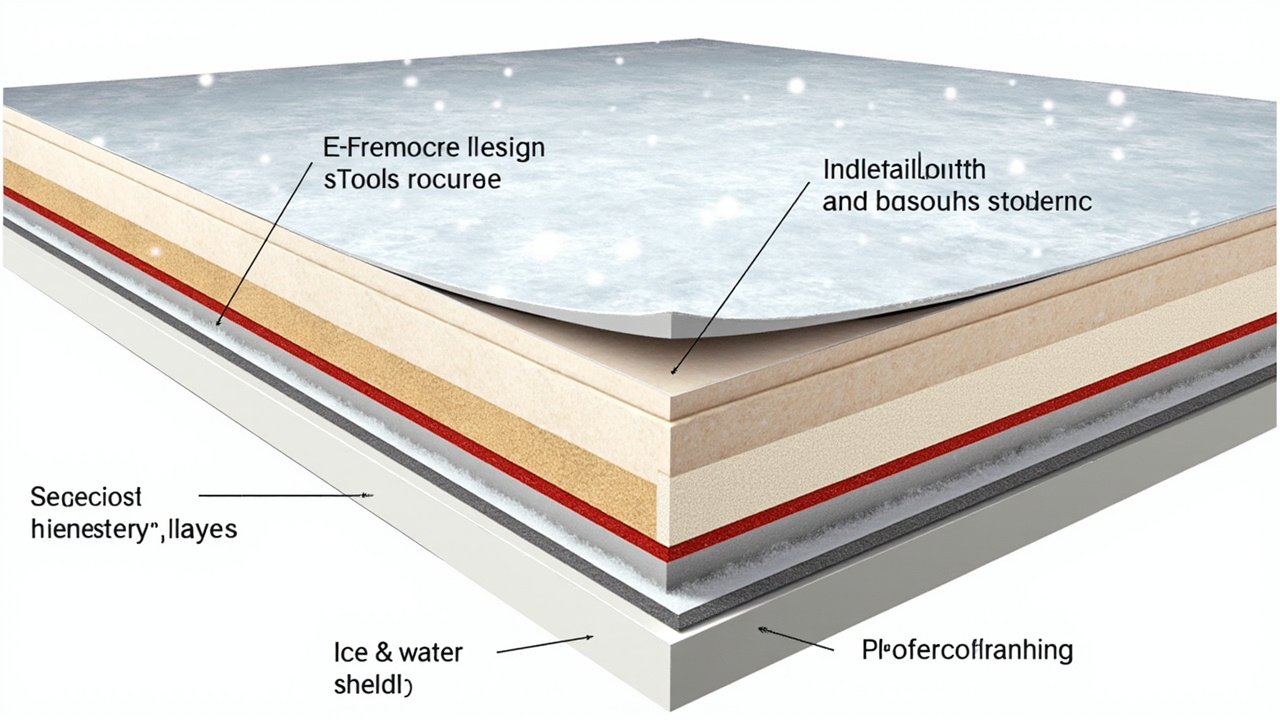
Third, ice and water shield installed 24 inches past the interior wall line creates a waterproof barrier. This is mandatory in Minnesota. When ice dams back water up under shingles or membrane edges, the shield prevents water penetration into the building structure.
For flat roofs, ice dams typically form at scupper openings or along eaves. Proper insulation and ventilation reduce dam formation. When dams do form, they back water into the roof system. Quality membranes with durable sealing at edges prevent this penetration.
During severe winters, the Minneapolis area experiences sustained below-zero temperatures combined with sun exposure. This creates the worst conditions for ice dams. Property managers in North Loop should plan ice dam removal as part of winter maintenance.
Residential Versus Commercial Flat Roofing in Minneapolis
North Loop condominiums face different roofing challenges than adjacent commercial warehouses, though both use flat membranes.
Residential flat roofs on condos must integrate with living spaces below. Attic ventilation is critical because homes generate interior moisture from cooking, showers, and laundry. This moisture condenses in attics and promotes mold growth if ventilation is inadequate. Proper soffit and ridge venting, combined with vapor barriers, prevents these problems.
Residential roofs must achieve R-49 insulation minimum per Minnesota code. This reduces heat loss and minimizes ice dam risk. Many North Loop condos have attic spaces where insulation can be added or upgraded. Others have cathedral ceilings with limited insulation space.
Commercial flat roofs prioritize drainage and load capacity. Many commercial buildings in North Loop have rooftop HVAC systems, electrical equipment, or green space installations. The roof must support these loads while maintaining membrane integrity.
Commercial roofs typically use TPO or EPDM with reinforced insulation. Access for maintenance and equipment servicing is planned during design. Walkways and equipment pads protect the membrane from foot traffic and equipment movement.
Both residential and commercial roofs in Minneapolis require proper flashing at all penetrations. Vents, pipes, skylights, and equipment connections must be sealed to prevent leaks. Flashing failure accounts for 80 percent of flat roof leaks.
Hennepin County Building Permits and Inspections
Roofing work in Minneapolis requires permits and inspections. The process protects your investment by ensuring code-compliant installation. Your commercial decision-maker gains assurance that work meets all Hennepin County standards and will pass municipal review.
Your contractor submits permit applications to the City of Minneapolis or Hennepin County depending on your building location. Applications require roof plans, material specifications, structural calculations for flat roofs, and contractor licensing information.
Permit turnaround typically takes 5 to 10 business days for straightforward roof replacements. Complex projects with structural modifications take 2 to 3 weeks. Work cannot begin until the permit is issued.
Hennepl County inspectors examine the completed roof. They verify membrane type and thickness, insulation R-value, flashing details, and drainage systems. Roofing installed without proper insulation or flashing will fail inspection.
The inspection process typically involves two visits. The first occurs after insulation and roof decking are installed but before the membrane is applied. The second occurs after membrane installation is complete. This allows the inspector to verify work at each stage.
Do not hire contractors who claim to work without permits. This approach saves a few hundred dollars upfront but creates liability for the property owner. Insurance claims are denied if work was unpermitted. Future buyers or lenders will reject the property. The short-term savings vanish when problems surface.
Cool Roof Technology and Energy Efficiency
Minneapolis offers rebates and incentives for energy-efficient roofing. These programs reduce installation costs while lowering operational expenses. For commercial property managers, energy savings improve building value and tenant retention.
Cool roofs use high-albedo (reflective) surfaces to reduce solar heat gain. White TPO and reflective coatings reduce roof surface temperatures by 40 to 60 degrees Fahrenheit. This reduces cooling loads by 10 to 15 percent depending on building design and insulation.
The Minnesota Office of Energy Security offers information on energy-efficient roofing through their website. Some utility providers in the Twin Cities offer rebates for cool roof installations. These incentives range from 10 to 25 cents per square foot depending on the program.
For commercial buildings, cool roofs improve tenant comfort while reducing energy expenses. Property managers recoup installation costs through energy savings within 5 to 10 years. The payback period varies based on utility rates and building usage patterns.
Energy Star certified roofing products qualify for additional incentives. These membranes are tested and verified to meet specific reflectance and emissivity standards. Ask your contractor which products carry Energy Star certification.
Flat Roof Repair Versus Replacement Decisions
Your North Loop building may need repair or complete replacement. This decision directly impacts your ROI and should be made during a thorough roof inspection by someone with decades of local experience.
Repair is appropriate when damage is localized to one section of the roof. A small puncture, isolated seam failure, or flashing leak can be sealed without replacing the entire membrane. Repair costs typically run 50 to 75 percent less than replacement.
Replacement becomes necessary when damage is widespread or the membrane is near the end of its lifespan. If the roof is 20 or more years old and showing multiple leaks, repair addresses symptoms rather than the underlying problem. Within one to two years, other areas fail.
Weather damage from hail or wind can damage large sections of membrane. Heavy hail creates punctures and cracks. Wind peels back membrane edges. This damage requires replacement, not repair.
Insurance coverage depends on damage cause and policy terms. Wind and hail damage is typically covered. Aging and lack of maintenance are not covered. Photograph all damage immediately and contact your insurance company before work begins.
A professional inspection clarifies the scope of needed work. Your contractor documents membrane condition, notes all leaks and damage, and recommends repair or replacement. This assessment protects you by preventing unnecessary work while identifying urgent problems.
Maintenance Schedules for Minneapolis Flat Roofs
Seasonal maintenance prevents small problems from becoming expensive failures. North Loop property owners and commercial managers should follow a structured schedule. Preventive maintenance delivers measurable ROI by extending roof life and avoiding emergency repairs.
Spring inspection occurs in April or May after winter weather has passed. Snow removal is complete and ice dams have melted. The inspector examines the membrane for damage, checks all seams and flashings, and verifies drainage is functioning. Gutters are cleaned of winter debris.
Summer maintenance includes monitoring for thermal expansion stress. Seams are inspected for separation or movement. Foot traffic areas are checked for membrane wear. Rooftop equipment is secured and inspected for leaks.
Fall preparation happens in September and October. Gutters and drains are cleaned before heavy precipitation season. The inspector verifies that insulation and ventilation will adequately handle moisture. All seams and flashings receive a protective coating if recommended.
Winter monitoring involves tracking snow accumulation and removing snow if loads exceed design limits. After major storms, inspect visible areas for damage. Document any leaks indoors that may trace to roof problems.
Annual professional inspections cost between 500 and 1500 dollars for commercial buildings, depending on size and complexity. This investment prevents emergency repairs that cost five to ten times more.
| Season | Maintenance Tasks | Priority |
|---|---|---|
| Spring (April-May) | Full inspection after winter, gutter cleaning, seam examination, drainage verification | High |
| Summer (June-August) | Thermal expansion monitoring, equipment inspection, foot traffic area checks | Medium |
| Fall (September-October) | Gutter and drain cleaning, insulation verification, protective coating application | High |
| Winter (November-March) | Snow load monitoring, storm damage assessment, leak documentation | Medium |
Warranty Coverage and Insurance Claim Assistance
Quality roofing installations include manufacturer warranties on materials and contractor warranties on labor. Understand what these warranties cover before signing a contract. Clear warranty terms protect your capital investment and future resale value.
Manufacturer warranties typically cover membrane defects for 10 to 20 years depending on the product. These warranties are non-transferable, applying only to the original building owner. If you sell the property, the new owner has no manufacturer recourse.
Labor warranties protect against installation defects. A proper warranty covers seam failures, flashing leaks, and water penetration caused by installation mistakes. Warranties typically run 5 to 10 years. After this period, repairs are your responsibility.
When damage occurs, contact your insurance company before hiring a contractor. Document all damage with photographs. Your insurer may cover repair costs if damage is from a covered peril like wind or hail.
Insurance claim denials often occur when roofs lack proper maintenance. If inspection shows a roof was clearly neglected, the insurer may refuse payment. This is why annual maintenance is essential for both protection and insurance eligibility.
Work with a contractor experienced in insurance claims. They understand documentation requirements and can provide the detailed inspection reports that insurers need. This partnership speeds the claims process and maximizes your recovery.
Why Minneapolis Contractors Need Specialized Training
Flat roofing in Minneapolis is not interchangeable with flat roofing in warmer climates. Our freeze-thaw cycles, heavy snow loads, and ice dam risks require specific knowledge. Commercial property managers gain confidence knowing their contractor brings Minnesota-specific expertise rather than generic training.
Experienced contractors understand Minnesota State Building Code requirements. They know the insulation R-values mandated for flat roofs. They understand Hennepin County permit processes and inspection standards. They recognize local architectural styles and constraints that affect installation.
Contractors licensed in Minnesota have completed training on freeze-thaw durability and cold-climate installation techniques. They understand how thermal movement affects membranes and why seam spacing matters in extreme temperature swings. They design drainage systems that handle 50-pound snow loads.
Avoid contractors without Minnesota experience. They may install membrane correctly for their home state but miss critical details for Minneapolis conditions. A bargain-priced contractor from out of state often delivers a roof that fails within 5 to 10 years.
Your North Loop building deserves contractor expertise built through years of handling local climate realities. This experience cannot be rushed or substituted with generic training.
Frequently Asked Questions
How often should flat roofs in Minneapolis be inspected
Professional inspections should occur annually, ideally in spring after winter weather passes and in fall before heavy precipitation season begins. You may inspect after major storms to document any damage. Between professional visits, property managers should monitor for visible signs of damage or water intrusion indoors.
Can flat roofs be installed on historic buildings in North Loop
Yes, but installation must comply with any historic district guidelines. Many North Loop buildings are in the North Loop Historic District with specific architectural requirements. Your contractor must coordinate with the Minneapolis Heritage Preservation Commission. Modern membranes can be installed while maintaining the building’s historic character through careful edge treatments and equipment placement.
What is the typical cost difference between TPO and EPDM
TPO typically costs 10 to 20 percent less per square foot than EPDM. EPDM lasts 30 to 40 years compared to 20 to 25 years for TPO. Over a 40-year period, EPDM often costs less when lifecycle costs are calculated. Initial price should not be the only factor in your decision.
How can I prevent ice dams on my North Loop condo
Install or upgrade attic insulation to R-49 minimum. Verify that soffit and ridge vents are clear of obstruction and appropriately sized. Ensure vapor barriers prevent interior moisture from entering attic spaces. Professional ice dam removal during severe winters may be necessary despite these preventive measures.
What permits are required for flat roof replacement in Minneapolis
Roof replacement requires a building permit from the City of Minneapolis or Hennepin County depending on your location. Your contractor submits the permit application with roof plans and material specifications. Expect 5 to 10 business days for permit approval on straightforward replacements.
Are there energy rebates for cool roof installations
Yes. Check the Minnesota Office of Energy Security website for current rebates and incentive programs. Some utility providers offer additional incentives for Energy Star certified cool roofs. Rebates can offset 10 to 25 cents per square foot of installation cost depending on the program.
How long does a flat roof installation take in Minneapolis
A typical commercial flat roof of 10,000 to 20,000 square feet takes 5 to 10 business days to install. Weather delays extend this timeline. Heavy rain prevents membrane installation. Cold temperatures below 40 degrees Fahrenheit may limit some installation methods. Spring and fall offer ideal installation windows in Minneapolis.
What should I do if I discover a leak in my flat roof
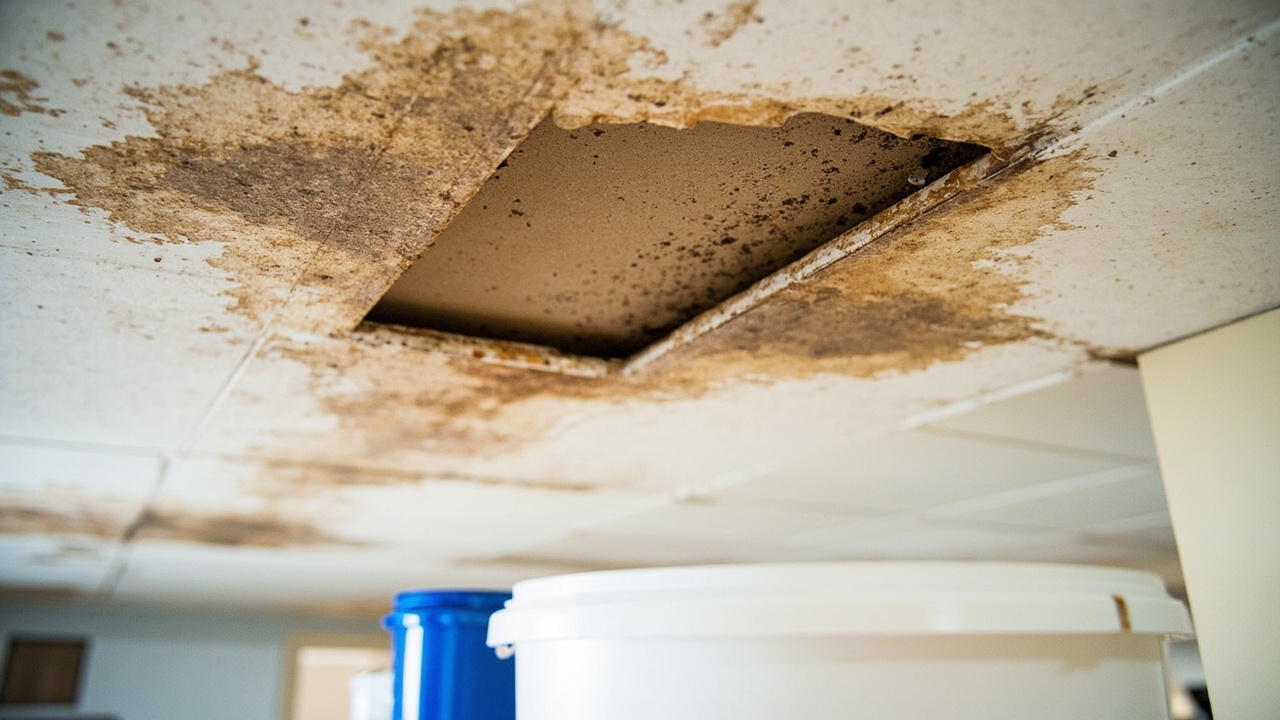
Stop the damage immediately by placing buckets under interior leaks. Photograph the leak location on the roof and document water damage indoors. Contact your contractor or insurance company to schedule an inspection. Do not allow water to remain standing in the building. Request a written estimate before authorizing repairs.
Take Action to Protect Your North Loop Building Today
Your flat roof is your building’s primary defense against Minneapolis winter weather and summer storms. A quality installation using the right membrane for your climate pays dividends over decades.
The decision between TPO, EPDM, and PVC should be based on your building’s specific needs, not price alone. Ice dam prevention requires attic insulation and ventilation working together with membrane quality. Drainage systems must handle snow loads and heavy precipitation without ponding water.
A professional inspection reveals the true condition of your roof and identifies whether repair or replacement is appropriate. This assessment costs a few hundred dollars but prevents thousands in emergency repairs.
Contact a Minneapolis contractor with deep local experience in flat roofing. They understand Hennepin County codes, Minnesota building standards, and the climate extremes that challenge flat roofs. Request references from North Loop properties they have completed. Ask about maintenance programs that keep your roof performing for decades.
Your building will not stay protected by itself. A structured maintenance schedule catching problems early prevents costly failures. Schedule your spring inspection today and stay ahead of the weather.
{
“@context”: “https://schema.org”,
“@type”: “BlogPosting”,
“headline”: “Modern Flat Roofing Solutions for North Loop Condos and Commercial Buildings”,
“description”: “Expert flat roofing for North Loop Minneapolis. TPO, EPDM, PVC membranes designed for Minneapolis winters and commercial building codes.”,
“wordCount”: 3849,
“datePublished”: “2026-03-18T07:21:00.000Z”,
“dateModified”: “2026-03-18T07:21:00.000Z”,
“inLanguage”: “en-US”,
“mainEntityOfPage”: {
“@type”: “WebPage”,
“@id”: “https://keystoneroofingminneapolis.com”
},
“publisher”: {
“@type”: “LocalBusiness”,
“name”: “Keystone Roofing Minneapolis”,
“url”: “https://keystoneroofingminneapolis.com”
},
“author”: {
“@type”: “Organization”,
“name”: “Keystone Roofing Minneapolis”,
“url”: “https://keystoneroofingminneapolis.com”
},
“image”: {
“@type”: “ImageObject”,
“url”: “https://keystoneroofingminneapolis.com/wp-content/uploads/2026/03/modern-flat-roofing-solutions-for-north-loop-condo-1.jpg”
}
}
{
“@context”: “https://schema.org”,
“@type”: “RoofingContractor”,
“name”: “Keystone Roofing Minneapolis”,
“url”: “https://keystoneroofingminneapolis.com”,
“address”: {
“@type”: “PostalAddress”,
“addressLocality”: “Minneapolis”
},
“areaServed”: {
“@type”: “City”,
“name”: “Minneapolis”
}
}
{
“@context”: “https://schema.org”,
“@type”: “BreadcrumbList”,
“itemListElement”: [
{
“@type”: “ListItem”,
“position”: 1,
“name”: “Home”,
“item”: “https://keystoneroofingminneapolis.com”
},
{
“@type”: “ListItem”,
“position”: 2,
“name”: “Blog”,
“item”: “https://keystoneroofingminneapolis.com/blog”
},
{
“@type”: “ListItem”,
“position”: 3,
“name”: “Modern Flat Roofing Solutions for North Loop Condos and Commercial Buildings”
}
]
}
{
“@context”: “https://schema.org”,
“@type”: “Service”,
“serviceType”: “Roofing”,
“provider”: {
“@type”: “LocalBusiness”,
“name”: “Keystone Roofing Minneapolis”,
“url”: “https://keystoneroofingminneapolis.com”
},
“areaServed”: {
“@type”: “City”,
“name”: “Minneapolis”
},
“description”: “Expert flat roofing for North Loop Minneapolis. TPO, EPDM, PVC membranes designed for Minneapolis winters and commercial building codes.”
}
