
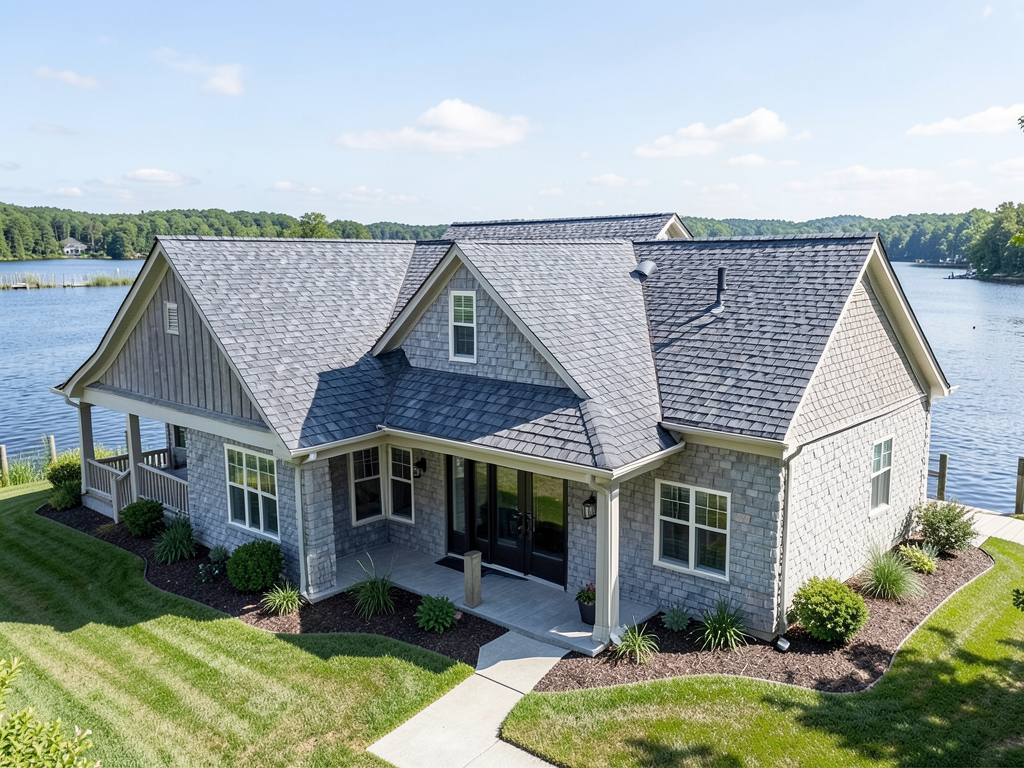
Comparing Synthetic Slate and High End Asphalt for Your Medicine Lake Property
Choosing between synthetic slate and high-end asphalt for your Medicine Lake home means weighing premium aesthetics against proven reliability in Minnesota’s extreme climate. Both materials offer distinct advantages for homeowners along Lake Minnetonka’s shoreline where freeze-thaw cycles heavy snow loads and ice dam formation create unique roofing challenges. Minnesota home insurance requirements.
Synthetic slate delivers the elegant appearance of natural stone without the weight concerns that plague traditional slate installations. High-end asphalt shingles provide architectural depth and impact resistance at a more accessible price point. Your decision impacts not just curb appeal but long-term maintenance costs and property value in this lakeside community. Commercial Roof Maintenance.
Understanding Synthetic Slate Roofing
Synthetic slate consists of polymer-based materials engineered to mimic natural slate’s distinctive texture and color variations. Manufacturers like DaVinci Roofscapes and Brava produce tiles from recycled plastics and rubber compounds that resist cracking during Minnesota’s temperature swings. DaVinci Roofscapes synthetic slate products.
The material weighs approximately 200 pounds per square compared to natural slate’s 800+ pounds. This lighter weight makes synthetic slate compatible with existing roof structures without requiring additional framing support. The tiles install using standard roofing techniques but require specialized fastening patterns to account for wind uplift along Medicine Lake’s exposed shoreline properties. Trusted Roofing Contractors in St. Louis Park for Shingle Replacement.
Synthetic slate offers Class 4 impact resistance the highest rating available for roofing materials. This protection proves valuable during summer hailstorms that frequently affect the western Twin Cities suburbs. The material also carries UL 2218 certification for fire resistance and meets Miami-Dade County hurricane standards. Storm Damage Roof Inspections in Plymouth – What to Look for After a Major Storm.
High-End Asphalt Shingle Options
Architectural asphalt shingles represent the most common roofing choice in Medicine Lake and surrounding areas. Premium lines from GAF Owens Corning and CertainTeed feature dimensional profiles that create shadow lines similar to wood shake or slate at a fraction of the cost. GAF premium asphalt shingles.
High-end asphalt shingles incorporate modified asphalt compounds and fiberglass reinforcement that extend lifespan beyond standard three-tab products. Many premium lines carry 30 to 50-year warranties and include algae-resistant granules that prevent black streaking in Minnesota’s humid summers.. Read more about Exploring Premium Roofing Materials for Orono Estates Beyond Traditional Wood Shakes.
Impact-resistant asphalt shingles achieve Class 4 ratings through reinforced backing and thicker granule layers. These products qualify for insurance premium discounts in Minnesota where hail damage claims average $10,000 per incident. The shingles install over standard underlayment and integrate with existing ventilation systems without modification.
Performance Comparison in Minnesota Weather
Minnesota’s climate creates distinct performance requirements that favor different materials depending on specific property characteristics. Medicine Lake’s proximity to water increases wind exposure while surrounding trees create debris accumulation patterns that affect material longevity.
Synthetic slate withstands temperature variations from -30°F winter lows to 95°F summer highs without thermal cracking. The material’s expansion joints accommodate seasonal movement while maintaining waterproof seals. However the smooth surface allows ice to form more readily during winter potentially increasing ice dam formation on north-facing slopes.
High-end asphalt shingles flex with temperature changes but may develop granule loss over time. The material’s textured surface provides better traction for ice removal when necessary. Premium asphalt products include self-sealing adhesive strips that bond shingles together during warm weather creating a unified barrier against wind-driven rain.
Cost Analysis for Medicine Lake Properties
Material costs vary significantly between synthetic slate and premium asphalt options. Synthetic slate installation averages $1,200 to $1,800 per square while high-end architectural asphalt ranges from $400 to $700 per square. These figures reflect 2026 market conditions in the western Twin Cities area.
The price difference stems from material composition and installation complexity. Synthetic slate requires specialized tools and longer installation times due to individual tile placement. Asphalt shingles install more quickly using pneumatic nail guns and pre-cut materials.
Long-term costs favor synthetic slate’s 50+ year lifespan against asphalt’s 25-30 year expectancy. However synthetic slate may require occasional cleaning to prevent algae growth in shaded areas. Asphalt shingles need periodic granule replacement and may require earlier replacement if subjected to severe weather events. How Much Does a Full Roof Replacement Cost in Bloomington?.
| Factor | Synthetic Slate | Premium Asphalt |
|---|---|---|
| Initial Cost (per square) | $1,200 – $1,800 | $400 – $700 |
| Expected Lifespan | 50+ years | 25-30 years |
| Weight (per square) | 200 lbs | 250-350 lbs |
| Impact Rating | Class 4 | Class 3-4 |
| Maintenance Needs | Low | Medium |
Ice Dam Prevention Strategies
Ice dam formation poses the greatest threat to Medicine Lake properties during winter months. Both materials require proper underlayment and ventilation to prevent water infiltration from melting snow.
Synthetic slate installations benefit from peel-and-stick ice and water shield applied to eaves valleys and around penetrations. The material’s smooth surface allows ice to slide more easily once temperatures rise above freezing. However synthetic slate’s uniform profile can channel water if ice dams form at roof edges.
Premium asphalt shingles include self-sealing adhesive that helps prevent wind-driven rain infiltration. The material’s textured surface provides better grip for ice removal tools when necessary. Asphalt installations require proper attic ventilation to maintain consistent roof temperatures and prevent snow melt that feeds ice dam formation.
Both materials achieve optimal ice dam resistance when paired with adequate soffit and ridge ventilation. Minnesota building codes require minimum 1 square foot of net free ventilation area per 150 square feet of attic space for homes in climate zones 6 and 7.
Aesthetic Considerations for Lakefront Properties
Medicine Lake homes range from classic Cape Cods to modern lakefront designs each presenting unique aesthetic opportunities. Synthetic slate offers authentic slate appearance with color blends that complement natural stone and cedar siding common in lakeside neighborhoods.
The material comes in various profiles including standard slate shake slate and diamond-cut patterns. Color options range from traditional gray and black to earth tones that coordinate with natural surroundings. Synthetic slate maintains consistent color throughout the material preventing the fading that affects some asphalt products.
Premium asphalt shingles provide architectural depth through dimensional profiles that create shadow lines. Designer lines include simulated wood shake and slate textures that appeal to homeowners seeking upscale appearance without premium pricing. The material accepts paint for custom color matching when desired.. Read more about Saving Money on Homeowners Insurance in Chanhassen with Impact Resistant Shingles.
Environmental Impact and Sustainability
Synthetic slate production utilizes recycled materials including post-consumer plastics and rubber tires. The manufacturing process consumes less energy than producing natural slate or asphalt shingles. Many synthetic slate products carry recycled content certifications and can be recycled again at end of life.
Premium asphalt shingles incorporate recycled content but require petroleum-based materials for waterproofing. The material’s shorter lifespan means more frequent replacement and disposal. Some manufacturers offer recycling programs that convert old shingles into road paving materials. Commercial Roofing.
Both materials contribute to urban heat island effects to varying degrees. Synthetic slate’s lighter colors reflect more solar radiation while premium asphalt’s darker tones absorb heat. Cool roof technology applies to both materials through specialized coatings that reduce heat absorption.
Installation Considerations for Medicine Lake Homes
Medicine Lake’s older homes built before 1980 may require structural evaluation before synthetic slate installation. The material’s weight distribution differs from asphalt shingles potentially requiring reinforcement of roof framing members. Homes built after 2000 typically accommodate synthetic slate without modification.
Installation timing affects both material choices. Minnesota’s construction season runs from April through November with peak demand during summer months. Synthetic slate installation requires warmer temperatures for proper sealing of underlayment components. Asphalt shingles install in cooler temperatures but may not achieve full adhesive activation until spring.
Local building permits apply to both materials under Minnesota Department of Labor and Industry regulations. Medicine Lake residents must comply with shoreline setback requirements and drainage ordinances that affect roof design and material selection.
Warranty and Insurance Implications
Synthetic slate manufacturers typically offer 50-year limited warranties covering material defects and color fading. Some premium lines extend coverage to 75 years with proper installation certification. Workmanship warranties vary by contractor but often range from 10 to 25 years.
Premium asphalt shingles carry 30 to 50-year limited warranties from manufacturers. Impact-resistant products may qualify for insurance premium discounts of 5-15% in Minnesota where hail damage claims are common. The discounts offset some of the higher initial material costs.
Insurance companies evaluate both materials based on impact resistance ratings and installation quality. Synthetic slate’s Class 4 rating provides maximum protection against hail damage. Premium asphalt’s self-sealing properties reduce wind damage claims in exposed lakefront locations.
Making the Right Choice for Your Property
Property characteristics should drive material selection rather than initial cost alone. Medicine Lake homes with complex rooflines featuring multiple valleys and dormers benefit from synthetic slate’s individual tile installation that accommodates irregular shapes. Simpler roof designs may not justify the premium cost.
Homeowners planning long-term residence often select synthetic slate for its longevity and premium appearance. The material’s 50+ year lifespan means a single installation covers multiple ownership periods. Premium asphalt appeals to homeowners expecting shorter occupancy or those prioritizing immediate cost savings.
Local climate patterns influence material performance. Medicine Lake’s western exposure increases wind and hail exposure compared to more sheltered neighborhoods. Properties with heavy tree cover may experience different debris accumulation patterns that affect material longevity.
Frequently Asked Questions
How long does synthetic slate last compared to asphalt shingles?
Synthetic slate typically lasts 50+ years while premium asphalt shingles last 25-30 years in Minnesota’s climate. The longer lifespan of synthetic slate often justifies the higher initial investment for homeowners planning long-term property ownership.
Does synthetic slate require special maintenance?
Synthetic slate requires minimal maintenance beyond periodic cleaning to remove debris and prevent algae growth. The material resists cracking and fading better than natural slate while maintaining its appearance throughout its lifespan.
Will my insurance premiums be lower with synthetic slate?
Insurance companies may offer premium discounts for Class 4 impact-resistant materials. Synthetic slate’s Class 4 rating qualifies for maximum discounts in Minnesota potentially offsetting 5-15% of the higher material costs through reduced annual premiums.
Can I install synthetic slate over my existing roof?
Most installations require complete tear-off to inspect decking and install proper underlayment. Synthetic slate’s installation methods differ from asphalt shingles making overlay installations impractical and potentially voiding warranties.
How does synthetic slate perform during Minnesota winters?
Synthetic slate withstands extreme cold without cracking and resists ice dam formation when properly installed with adequate ventilation. The material’s smooth surface allows ice to slide more easily once temperatures rise above freezing.
What is the return on investment for synthetic slate?
Synthetic slate typically adds 60-80% of its cost to home value while providing 50+ years of service. The material’s longevity and premium appearance often justify the investment for lakefront properties where curb appeal significantly impacts market value.
Ready to upgrade your Medicine Lake home with premium roofing that withstands Minnesota’s toughest weather? Call Keystone Roofing Minneapolis at (651) 588-9277 for a free consultation and see why local homeowners trust our 15+ years of experience with both synthetic slate and high-end asphalt installations.. Read more about Finding a Fire-Resistant Roofing Material That Still Looks Great in Wooded North Oaks.
You may also find this helpful. Comparing Malarkey Legacy and GAF Timberline HDZ for the Extreme Minnesota Climate.
{
“@context”: “https://schema.org”,
“@type”: “BlogPosting”,
“headline”: “Comparing Synthetic Slate and High End Asphalt for Your Medicine Lake Property”,
“description”: “Compare synthetic slate vs high-end asphalt roofing for Medicine Lake homes. Learn about durability, cost, and performance in Minnesota’s climate from local experts.”,
“wordCount”: 1824,
“datePublished”: “2026-04-09T04:09:00.000Z”,
“dateModified”: “2026-04-09T04:09:00.000Z”,
“inLanguage”: “en-US”,
“mainEntityOfPage”: {
“@type”: “WebPage”,
“@id”: “https://keystoneroofingminneapolis.com”
},
“publisher”: {
“@type”: “LocalBusiness”,
“name”: “Keystone Roofing Minneapolis”,
“url”: “https://keystoneroofingminneapolis.com”
},
“author”: {
“@type”: “Organization”,
“name”: “Keystone Roofing Minneapolis”,
“url”: “https://keystoneroofingminneapolis.com”
},
“image”: {
“@type”: “ImageObject”,
“url”: “https://keystoneroofingminneapolis.com/wp-content/uploads/2026/03/comparing-synthetic-slate-and-high-end-asphalt-for-1.png”
}
}
{
“@context”: “https://schema.org”,
“@type”: “RoofingContractor”,
“name”: “Keystone Roofing Minneapolis”,
“url”: “https://keystoneroofingminneapolis.com”,
“address”: {
“@type”: “PostalAddress”,
“addressLocality”: “Minneapolis”
},
“areaServed”: {
“@type”: “City”,
“name”: “Minneapolis”
}
}
{
“@context”: “https://schema.org”,
“@type”: “FAQPage”,
“mainEntity”: [
{
“@type”: “Question”,
“name”: “How long does synthetic slate last compared to asphalt shingles?”,
“acceptedAnswer”: {
“@type”: “Answer”,
“text”: “Synthetic slate typically lasts 50+ years while premium asphalt shingles last 25-30 years in Minnesota’s climate. The longer lifespan of synthetic slate often justifies the higher initial investment for homeowners planning long-term property ownership.”
}
},
{
“@type”: “Question”,
“name”: “Does synthetic slate require special maintenance?”,
“acceptedAnswer”: {
“@type”: “Answer”,
“text”: “Synthetic slate requires minimal maintenance beyond periodic cleaning to remove debris and prevent algae growth. The material resists cracking and fading better than natural slate while maintaining its appearance throughout its lifespan.”
}
},
{
“@type”: “Question”,
“name”: “Will my insurance premiums be lower with synthetic slate?”,
“acceptedAnswer”: {
“@type”: “Answer”,
“text”: “Insurance companies may offer premium discounts for Class 4 impact-resistant materials. Synthetic slate’s Class 4 rating qualifies for maximum discounts in Minnesota potentially offsetting 5-15% of the higher material costs through reduced annual premiums.”
}
},
{
“@type”: “Question”,
“name”: “Can I install synthetic slate over my existing roof?”,
“acceptedAnswer”: {
“@type”: “Answer”,
“text”: “Most installations require complete tear-off to inspect decking and install proper underlayment. Synthetic slate’s installation methods differ from asphalt shingles making overlay installations impractical and potentially voiding warranties.”
}
},
{
“@type”: “Question”,
“name”: “How does synthetic slate perform during Minnesota winters?”,
“acceptedAnswer”: {
“@type”: “Answer”,
“text”: “Synthetic slate withstands extreme cold without cracking and resists ice dam formation when properly installed with adequate ventilation. The material’s smooth surface allows ice to slide more easily once temperatures rise above freezing.”
}
},
{
“@type”: “Question”,
“name”: “What is the return on investment for synthetic slate?”,
“acceptedAnswer”: {
“@type”: “Answer”,
“text”: “Synthetic slate typically adds 60-80% of its cost to home value while providing 50+ years of service. The material’s longevity and premium appearance often justify the investment for lakefront properties where curb appeal significantly impacts market value.”
}
}
]
}
{
“@context”: “https://schema.org”,
“@type”: “BreadcrumbList”,
“itemListElement”: [
{
“@type”: “ListItem”,
“position”: 1,
“name”: “Home”,
“item”: “https://keystoneroofingminneapolis.com”
},
{
“@type”: “ListItem”,
“position”: 2,
“name”: “Blog”,
“item”: “https://keystoneroofingminneapolis.com/blog”
},
{
“@type”: “ListItem”,
“position”: 3,
“name”: “Comparing Synthetic Slate and High End Asphalt for Your Medicine Lake Property”
}
]
}
{
“@context”: “https://schema.org”,
“@type”: “Service”,
“serviceType”: “Roofing”,
“provider”: {
“@type”: “LocalBusiness”,
“name”: “Keystone Roofing Minneapolis”,
“url”: “https://keystoneroofingminneapolis.com”
},
“areaServed”: {
“@type”: “City”,
“name”: “Minneapolis”
},
“description”: “Compare synthetic slate vs high-end asphalt roofing for Medicine Lake homes. Learn about durability, cost, and performance in Minnesota’s climate from local experts.”
}
