
Comparing TPO and PVC Roofing Systems for Commercial Buildings in the Minneapolis Warehouse District
Choosing between TPO and PVC roofing systems for your Minneapolis Warehouse District building means understanding how these materials handle Minnesota’s extreme freeze-thaw cycles heavy snow loads and high winds. Both thermoplastic membranes offer energy efficiency and durability but they respond differently to the specific challenges of the Upper Midwest climate. Choosing the Right Cedar Shake Contractor for Your Minnetonka Home.
Building owners in the Warehouse District face unique conditions including large flat roof areas exposure to harsh winter storms and the need for chemical resistance in certain industrial applications. This comparison breaks down the technical differences installation requirements and long-term performance factors to help you make the right investment decision. Storm Damage Roof Inspections in Plymouth – What to Look for After a Major Storm.
Understanding Single-Ply Membrane Roofing Chemistry
TPO and PVC belong to the thermoplastic single-ply membrane family but their chemical compositions create distinct performance characteristics. TPO uses a polymer base reinforced with fiberglass or polyester scrim creating a flexible sheet that resists UV degradation and offers excellent energy efficiency.
PVC contains polyvinyl chloride resins with plasticizers that provide superior flexibility and chemical resistance. The plasticizers allow PVC to maintain flexibility at extremely low temperatures making it ideal for Minneapolis winters where temperatures regularly drop below zero.
The manufacturing processes differ significantly. TPO production involves calendering or extrusion creating sheets with consistent thickness and uniform properties. PVC manufacturing uses calendaring with added stabilizers and pigments resulting in a more uniform material that resists chemical degradation.
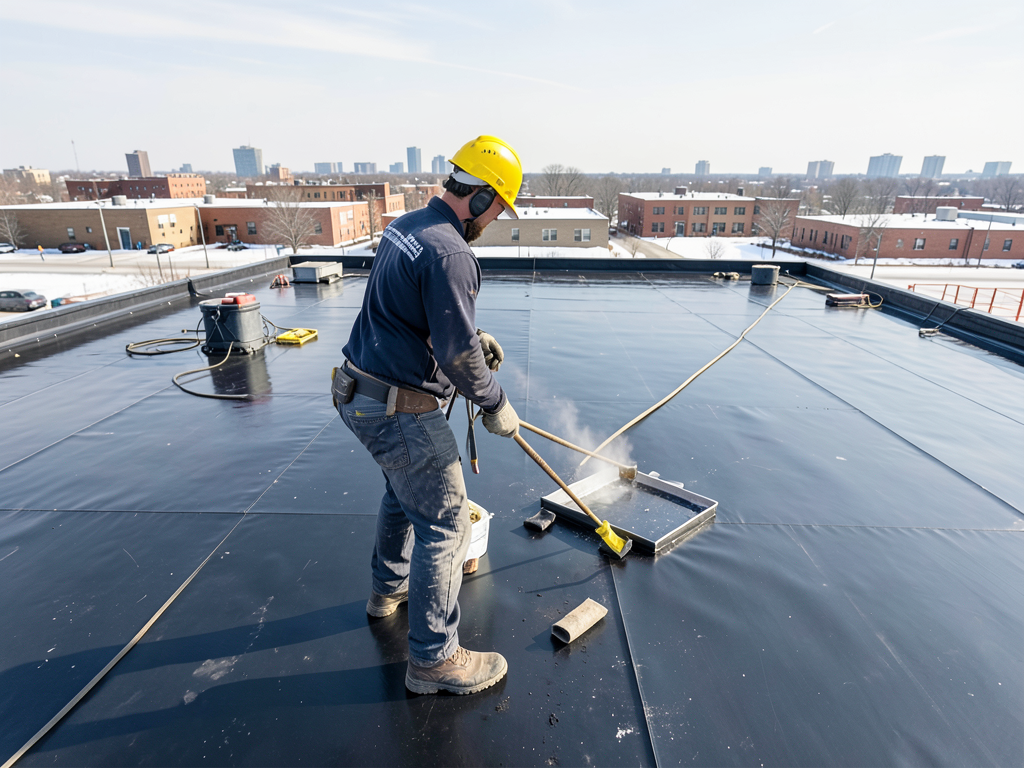
Both materials undergo heat welding during installation creating permanent seams that are stronger than the base material. However the welding temperatures and techniques vary requiring different training and equipment for each system.
The Minneapolis Climate Factor
Minneapolis experiences temperature swings from -30°F in winter to 95°F in summer creating expansion and contraction cycles that test roofing materials. TPO typically handles these cycles well with flexibility ratings down to -20°F while PVC maintains flexibility to -40°F. Trusted Roofing Contractors in St. Louis Park for Shingle Replacement.
Heavy snow accumulation in the Warehouse District creates significant structural loads. Both materials support snow loads when properly installed but PVC’s chemical resistance makes it better suited for areas where deicing chemicals are used near HVAC units or loading docks.. Read more about Why Mill District Condo Associations Struggle with Flat Roof Drainage.
Wind uplift in exposed Warehouse District locations requires proper attachment methods. TPO and PVC both meet Minnesota building code requirements when installed according to manufacturer specifications but PVC’s heavier weight provides slightly better wind resistance.
Freeze-thaw cycles cause expansion in roof penetrations and around HVAC equipment. PVC’s superior flexibility reduces the risk of cracking around these stress points compared to TPO.
Technical Performance Comparison
Puncture resistance varies between the two materials. TPO typically offers better resistance to foot traffic and dropped tools with puncture ratings around 50 pounds of force. PVC provides slightly less puncture resistance at approximately 40 pounds but compensates with better tear resistance.
UV resistance affects long-term performance in Minnesota’s intense summer sun. TPO includes UV inhibitors in the manufacturing process providing excellent reflectivity and energy efficiency. PVC relies on its white surface and chemical composition for UV protection.
Fire resistance ratings show both materials meet Class A requirements when installed with proper underlayment. TPO has slightly better flame spread ratings while PVC offers better resistance to burning embers from nearby wildfires.
Moisture vapor transmission rates differ significantly. TPO allows minimal vapor transmission making it suitable for buildings with high interior humidity. PVC provides even better vapor barrier properties reducing the risk of condensation in temperature-controlled warehouses.
Cost Analysis for Minneapolis Buildings
Initial installation costs vary by material thickness and installation method. TPO typically costs $6 to $8 per square foot installed while PVC ranges from $7 to $9 per square foot. These prices reflect Minneapolis labor rates and material availability in 2026.
Life cycle costs depend on maintenance requirements and replacement frequency. TPO systems generally last 20 to 25 years while PVC can exceed 25 years with proper maintenance. The longer lifespan of PVC often offsets its higher initial cost over time. How Much Does a Full Roof Replacement Cost in Bloomington?.
Energy efficiency impacts operational costs significantly. TPO’s higher reflectivity can reduce cooling costs by 15 to 20 percent during summer months. PVC also provides good reflectivity but may absorb slightly more heat in winter benefiting Minneapolis buildings that prioritize heating efficiency.
Repair costs vary by damage type. TPO repairs typically cost less due to easier heat welding and material availability. PVC repairs require more precise temperature control but the material’s chemical resistance means fewer repairs are needed overall. EPA Cool Roofs information.
| Factor | TPO | PVC |
|---|---|---|
| Initial Cost | $6-8/sq ft | $7-9/sq ft |
| Lifespan | 20-25 years | 25+ years |
| Flexibility | -20°F | -40°F |
| Puncture Resistance | 50 lbs force | 40 lbs force |
| UV Reflectivity | Excellent | Very Good |
Chemical Resistance Applications
Chemical exposure determines material selection for many Minneapolis Warehouse District buildings. PVC’s superior resistance to oils greases and industrial chemicals makes it essential for restaurants food processing facilities and manufacturing plants.
Restaurants in the Warehouse District often require PVC membranes due to grease exposure from rooftop HVAC units and exhaust fans. The plasticizers in PVC prevent degradation from animal fats and cooking oils that would damage TPO membranes.
Manufacturing facilities dealing with chemical emissions benefit from PVC’s resistance to acids bases and solvents. The material maintains integrity when exposed to cleaning agents and industrial byproducts common in Warehouse District operations.
Standard warehouses and storage facilities typically use TPO due to its lower cost and adequate performance for non-chemical environments. The material handles dust dirt and normal wear without special chemical resistance requirements.
Loading docks and equipment areas may need PVC protection where fuel oil and hydraulic fluids could spill. The chemical resistance prevents staining and degradation from automotive fluids common in industrial settings.
Installation Methods and Considerations
Mechanically attached systems represent the most common installation method for both materials in Minneapolis. This approach uses plates and screws to secure the membrane to the roof deck providing good wind resistance and allowing for thermal movement.
Fully adhered installations create a smooth surface by gluing the membrane to insulation or the roof deck. This method works well for buildings requiring superior wind uplift resistance and provides better protection against wind-driven rain.
Ballasted systems use river rock or concrete pavers to hold the membrane in place. While less common in the Warehouse District this method works for buildings with heavy roof decks and provides excellent wind resistance without penetration.
Winter installation presents unique challenges in Minneapolis. TPO can be installed at temperatures as low as 20°F while PVC requires temperatures above 35°F for proper heat welding. Both materials need careful handling to prevent cracking in extreme cold.
Seam welding quality determines long-term performance. TPO seams require precise temperature control between 400°F and 500°F. PVC seams weld at higher temperatures around 600°F but are more forgiving of temperature variations.
Minneapolis Building Code Requirements
Minnesota building codes specify minimum requirements for commercial roofing in the Warehouse District. Both TPO and PVC must meet Class A fire ratings and pass wind uplift tests according to ASTM standards. ASTM D6878 standard for TPO roofing.
Energy codes in Minneapolis require roofing materials to meet minimum reflectivity standards. TPO typically exceeds these requirements with reflectivity ratings above 80 percent while PVC meets the minimum 70 percent requirement.
Ice and water shield requirements apply to all commercial roofs in Minneapolis. Building codes mandate installation at eaves valleys and around penetrations to prevent ice dam damage during severe winter storms.
Permit requirements include engineering calculations for wind uplift resistance and snow load capacity. The Warehouse District’s proximity to downtown Minneapolis subjects buildings to higher wind loads requiring additional fastening.
Inspection requirements during installation ensure proper welding techniques and attachment methods. Building officials verify seam quality and membrane thickness before approving final occupancy.
Maintenance and Long-Term Performance
Regular maintenance extends the life of both roofing systems. TPO requires annual inspections to check seam integrity and membrane condition. The material’s resistance to mold and algae growth reduces cleaning requirements.
PVC maintenance focuses on seam inspection and chemical damage prevention. The material’s superior chemical resistance means fewer repairs but seam separation can occur if not properly maintained. Expert Flat Roof Repair Services for Uptown Businesses and Modern Lofts.
Snow removal practices affect long-term performance. Both materials withstand snow removal equipment when properly installed but PVC’s flexibility provides better resistance to scraping damage from shovels and plows.
Hail resistance varies between the materials. TPO typically withstands hail up to one inch in diameter while PVC can resist hail up to one and a half inches. The Warehouse District’s location in the northern plains makes hail resistance an important consideration.
Thermal cycling causes expansion and contraction in both materials. PVC’s superior flexibility reduces the stress on fasteners and seams during extreme temperature changes common in Minneapolis.
Environmental Impact and Sustainability
Both materials offer environmental benefits compared to traditional roofing systems. TPO contains no chlorine or plasticizers making it more environmentally friendly during manufacturing and disposal.
PVC production involves chlorine and plasticizers but the material’s longer lifespan can offset its higher environmental impact. Recycling programs for both materials continue to expand in Minnesota.
Energy efficiency reduces building carbon footprints. TPO’s superior reflectivity provides greater cooling energy savings while PVC’s performance in winter may reduce heating requirements for Minneapolis buildings.
Material disposal considerations affect end-of-life planning. TPO recycling options continue to grow while PVC recycling remains more limited but expanding in the Upper Midwest region.
Manufacturing locations impact transportation emissions. Many TPO and PVC products are produced in the Midwest reducing transportation distances to Minneapolis compared to materials manufactured on the coasts.
Making the Right Choice for Your Warehouse District Building
Building use determines the most suitable material. Restaurants food processing and chemical manufacturing facilities benefit from PVC’s superior chemical resistance despite higher costs.
Standard warehousing and storage applications often choose TPO for its lower initial cost and adequate performance in non-chemical environments. The material’s energy efficiency provides operational savings over time.
Budget constraints influence material selection. TPO offers lower upfront costs making it attractive for buildings with limited capital budgets or shorter planned ownership periods.
Long-term ownership favors PVC’s durability and reduced maintenance requirements. Buildings planning to own properties for extended periods benefit from PVC’s longer lifespan and lower lifetime costs.
Local climate conditions in Minneapolis favor materials with superior cold weather flexibility. Both TPO and PVC perform well but PVC’s greater flexibility provides better performance during extreme cold snaps.
Building location within the Warehouse District affects wind uplift requirements. Exposed corners and edges may need the superior wind resistance of PVC or additional fastening for TPO installations.
Frequently Asked Questions
Which roofing material lasts longer in Minneapolis weather?
PVC typically lasts longer than TPO in Minneapolis due to superior flexibility at extreme temperatures and better resistance to freeze-thaw cycles. PVC systems often exceed 25 years while TPO generally lasts 20 to 25 years.
Can these materials be installed during Minnesota winters?
TPO can be installed at temperatures as low as 20°F while PVC requires temperatures above 35°F for proper heat welding. Both materials need careful handling to prevent cracking in extreme cold.
What are the main cost differences between TPO and PVC?
TPO typically costs $6 to $8 per square foot installed while PVC ranges from $7 to $9 per square foot. PVC’s higher cost reflects its superior chemical resistance and longer lifespan.
Which material is better for a restaurant in the Warehouse District?
PVC is better for restaurants due to superior resistance to grease oils and cleaning chemicals. The material prevents degradation from cooking byproducts and exhaust emissions common in restaurant operations.
How do these materials handle Minneapolis snow loads?
Both materials handle Minneapolis snow loads when properly installed. PVC offers slightly better performance due to its chemical resistance when deicing chemicals are used near HVAC units and loading docks.
Get Expert Advice for Your Warehouse District Building
Choosing between TPO and PVC roofing requires understanding your building’s specific needs and local climate challenges. The Warehouse District’s unique conditions including extreme temperature swings heavy snow loads and industrial chemical exposure make professional guidance essential.
Keystone Roofing Minneapolis provides free roof inspections and consultations for commercial buildings throughout the Warehouse District and surrounding areas. Our team understands Minneapolis building codes manufacturer specifications and local weather patterns affecting roofing performance.
Call (651) 588-9277 today to schedule your free inspection. We’ll evaluate your building’s specific requirements compare material options and provide clear recommendations based on your budget and long-term goals. Don’t wait until minor issues become major problems.
Protect your Warehouse District investment with the right roofing system installed by experienced Minneapolis professionals. Contact us now for honest expert advice and competitive pricing on TPO or PVC roofing solutions.
{
“@context”: “https://schema.org”,
“@type”: “BlogPosting”,
“headline”: “Comparing TPO and PVC Roofing Systems for Commercial Buildings in the Minneapolis Warehouse District”,
“description”: “Find out which single-ply membrane roofing system performs best in Minneapolis’ extreme climate. Compare TPO vs PVC costs, durability, and installation for Warehouse District buildings.”,
“wordCount”: 2135,
“datePublished”: “2026-06-01T14:37:00.000Z”,
“dateModified”: “2026-06-01T14:37:00.000Z”,
“inLanguage”: “en-US”,
“mainEntityOfPage”: {
“@type”: “WebPage”,
“@id”: “https://keystoneroofingminneapolis.com”
},
“publisher”: {
“@type”: “LocalBusiness”,
“name”: “Keystone Roofing Minneapolis”,
“url”: “https://keystoneroofingminneapolis.com”
},
“author”: {
“@type”: “Organization”,
“name”: “Keystone Roofing Minneapolis”,
“url”: “https://keystoneroofingminneapolis.com”
},
“image”: {
“@type”: “ImageObject”,
“url”: “https://keystoneroofingminneapolis.com/wp-content/uploads/2026/03/comparing-tpo-and-pvc-roofing-systems-for-commerci-1.png”
}
}
{
“@context”: “https://schema.org”,
“@type”: “RoofingContractor”,
“name”: “Keystone Roofing Minneapolis”,
“url”: “https://keystoneroofingminneapolis.com”,
“address”: {
“@type”: “PostalAddress”,
“addressLocality”: “Minneapolis”
},
“areaServed”: {
“@type”: “City”,
“name”: “Minneapolis”
}
}
{
“@context”: “https://schema.org”,
“@type”: “FAQPage”,
“mainEntity”: [
{
“@type”: “Question”,
“name”: “Which roofing material lasts longer in Minneapolis weather?”,
“acceptedAnswer”: {
“@type”: “Answer”,
“text”: “PVC typically lasts longer than TPO in Minneapolis due to superior flexibility at extreme temperatures and better resistance to freeze-thaw cycles. PVC systems often exceed 25 years while TPO generally lasts 20 to 25 years.”
}
},
{
“@type”: “Question”,
“name”: “Can these materials be installed during Minnesota winters?”,
“acceptedAnswer”: {
“@type”: “Answer”,
“text”: “TPO can be installed at temperatures as low as 20°F while PVC requires temperatures above 35°F for proper heat welding. Both materials need careful handling to prevent cracking in extreme cold.”
}
},
{
“@type”: “Question”,
“name”: “What are the main cost differences between TPO and PVC?”,
“acceptedAnswer”: {
“@type”: “Answer”,
“text”: “TPO typically costs $6 to $8 per square foot installed while PVC ranges from $7 to $9 per square foot. PVC’s higher cost reflects its superior chemical resistance and longer lifespan.”
}
},
{
“@type”: “Question”,
“name”: “Which material is better for a restaurant in the Warehouse District?”,
“acceptedAnswer”: {
“@type”: “Answer”,
“text”: “PVC is better for restaurants due to superior resistance to grease oils and cleaning chemicals. The material prevents degradation from cooking byproducts and exhaust emissions common in restaurant operations.”
}
},
{
“@type”: “Question”,
“name”: “How do these materials handle Minneapolis snow loads?”,
“acceptedAnswer”: {
“@type”: “Answer”,
“text”: “Both materials handle Minneapolis snow loads when properly installed. PVC offers slightly better performance due to its chemical resistance when deicing chemicals are used near HVAC units and loading docks.”
}
}
]
}
{
“@context”: “https://schema.org”,
“@type”: “BreadcrumbList”,
“itemListElement”: [
{
“@type”: “ListItem”,
“position”: 1,
“name”: “Home”,
“item”: “https://keystoneroofingminneapolis.com”
},
{
“@type”: “ListItem”,
“position”: 2,
“name”: “Blog”,
“item”: “https://keystoneroofingminneapolis.com/blog”
},
{
“@type”: “ListItem”,
“position”: 3,
“name”: “Comparing TPO and PVC Roofing Systems for Commercial Buildings in the Minneapolis Warehouse District”
}
]
}
{
“@context”: “https://schema.org”,
“@type”: “Service”,
“serviceType”: “Roofing”,
“provider”: {
“@type”: “LocalBusiness”,
“name”: “Keystone Roofing Minneapolis”,
“url”: “https://keystoneroofingminneapolis.com”
},
“areaServed”: {
“@type”: “City”,
“name”: “Minneapolis”
},
“description”: “Find out which single-ply membrane roofing system performs best in Minneapolis’ extreme climate. Compare TPO vs PVC costs, durability, and installation for Warehouse District buildings.”
}
