
Why Woodpeckers are Boring Holes in Your Orono Siding and Roofline (And How to Stop Them)
Your Orono home’s beautiful cedar siding and roofline might be attracting more than compliments from neighbors. Woodpeckers are drilling holes in homes throughout the Lake Minnetonka area, causing thousands of dollars in damage to fascia boards, soffits, and shingles. This isn’t just a nuisance problem. The holes they create allow moisture intrusion, leading to rot and structural damage that compromises your home’s integrity.
Woodpeckers are particularly active in Orono because of our abundant mature trees and the insects they harbor. The combination of cedar siding, carpenter bee infestations, and territorial drumming creates the perfect storm for woodpecker damage. Understanding why these birds target your home is the first step toward effective prevention and repair. Expert Flat Roof Repair Services for Uptown Businesses and Modern Lofts.
Why Woodpeckers Target Your Orono Home
Woodpeckers don’t randomly attack homes. They’re looking for three specific things: food, shelter, and a place to make noise. In Orono’s wooded environment, your home might be providing all three.
Cedar siding is a prime target because it often harbors carpenter bees and their larvae. Woodpeckers can hear the insects inside the wood and will drill holes to reach them. The sound of their drilling can travel through the structure, creating an annoying drumming noise that echoes through your walls.
The Pileated Woodpecker, one of Minnesota’s largest woodpecker species, is particularly destructive. These birds have powerful beaks that can create holes up to four inches wide. The Hairy Woodpecker and Downy Woodpecker are smaller but still cause significant damage over time.
Woodpeckers also drum on wood to establish territory and attract mates. Your home’s siding provides an excellent surface for this behavior, especially during spring mating season when activity peaks.
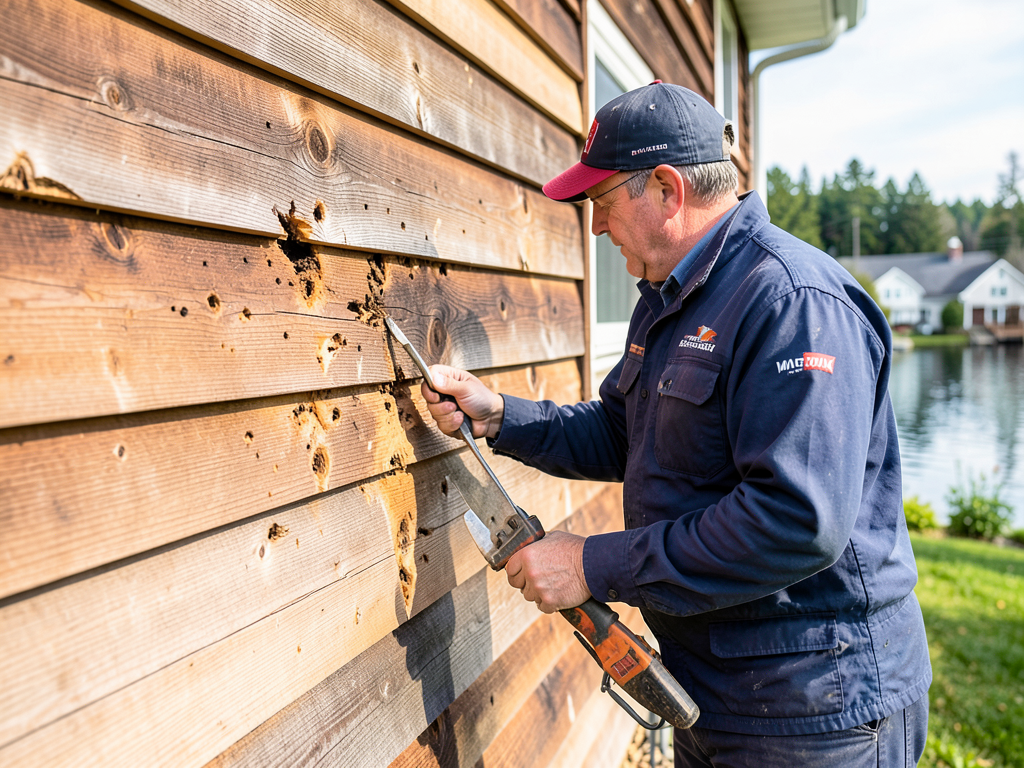
Common Signs of Woodpecker Damage
- Multiple small holes in a horizontal or vertical pattern
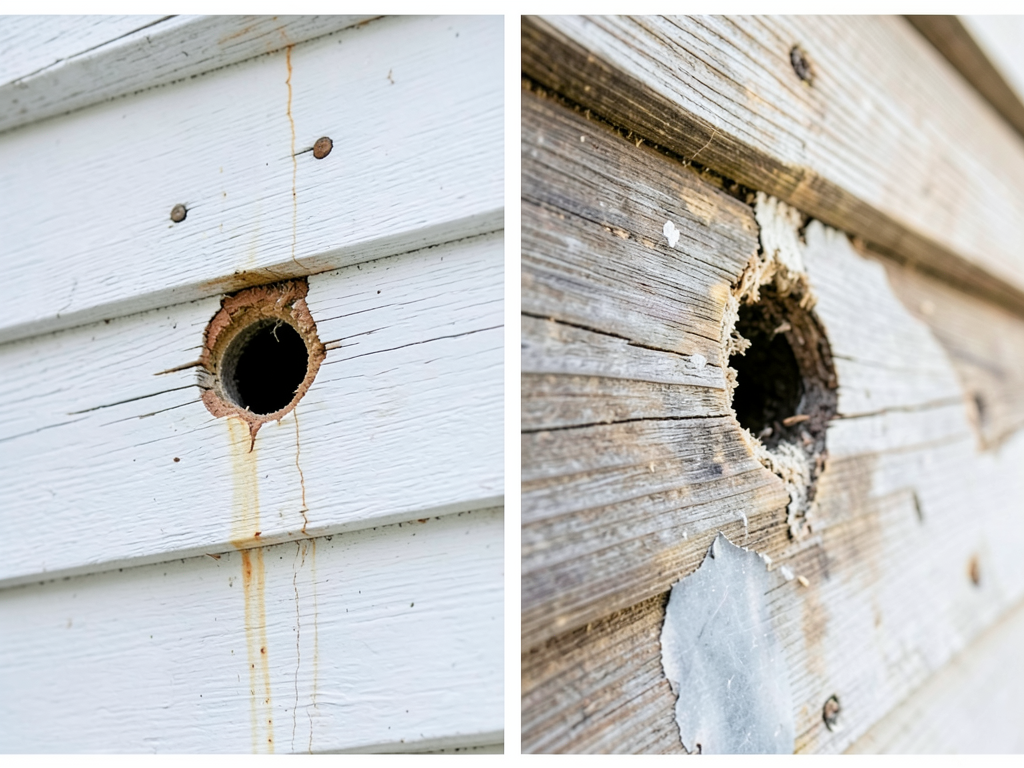
- Large, irregular holes in fascia boards or soffits
- Wood chips or sawdust around the base of your home
- Visible carpenter bee holes that have been enlarged
- Water stains or rot around damaged areas
Our Specialized Repair Process for Bird Damage
Repairing woodpecker damage requires more than just filling holes. Our process addresses both the visible damage and the underlying issues that attracted the birds in the first place.
- Comprehensive Inspection
We examine the entire roofline and siding to identify all damage, including hidden moisture issues and insect infestations that may be attracting woodpeckers.
- Structural Assessment
We check for rot, water damage, and compromised structural integrity in fascia boards, soffits, and sheathing.
- Material Replacement
We replace damaged wood components with high-quality materials that resist future damage. This may include switching from cedar to more durable options.
- Moisture Barrier Installation
We install proper flashing and moisture barriers to prevent future water intrusion through any remaining gaps.
- Surface Preparation and Finishing
We match existing finishes or update the entire area for a uniform appearance.
Preventing Future Damage: Deterrents and Materials
Prevention is more cost-effective than repeated repairs. Several strategies can make your home less attractive to woodpeckers.
Visual Deterrents
Reflective tape, hanging CDs, or specialized bird deterrent strips can scare woodpeckers away. These work best when combined with other methods.
Auditory Deterrents
Devices that emit predator calls or woodpecker distress sounds can be effective. These are particularly useful in areas with high woodpecker populations.
Physical Barriers
Installing bird netting or wire mesh over vulnerable areas can prevent woodpeckers from accessing your siding or roofline.
Material Upgrades
Replacing vulnerable wood siding with James Hardie fiber cement siding or vinyl can eliminate the food source that attracts woodpeckers. These materials look like wood but woodpeckers cannot penetrate them. James Hardie fiber cement siding.
Professional Grade Deterrents
We install specialized bird deterrent strips along rooflines and eaves. These create an uncomfortable surface that woodpeckers avoid without harming the birds.
Insurance Coverage for Woodpecker Damage in Minnesota
Many Minnesota homeowners are surprised to learn that standard homeowners insurance policies often don’t cover woodpecker damage. Insurance companies typically classify this as a maintenance issue rather than a sudden, accidental loss. Commercial Roof Maintenance.
However, if the woodpecker damage leads to water intrusion and subsequent structural damage, you may have coverage for the resulting damage. The key is documenting the sequence of events and the extent of the damage.
We work with insurance companies to provide detailed damage assessments and repair estimates. Our documentation includes photos, measurements, and professional evaluations that support your claim.
For Orono residents, understanding your specific policy coverage is crucial. Some policies exclude wildlife damage entirely, while others may cover damage if it results in secondary issues like mold or structural rot.
Choosing the Right Materials for Your Orono Home
The right materials can make all the difference in preventing future woodpecker damage. Here’s a comparison of common options:
| Material | Woodpecker Resistance | Maintenance | Cost Range |
|---|---|---|---|
| Cedar Siding | Low | High | $8-12/sq ft |
| James Hardie Fiber Cement | High | Low | $10-15/sq ft |
| Engineered Wood | Medium | Medium | $6-9/sq ft |
| Vinyl Siding | High | Very Low | $4-7/sq ft |
Best Practices for Installation
Proper installation is just as important as material selection. We ensure:
- Proper flashing around all roof penetrations
- Adequate ventilation to prevent moisture buildup
- Sealed joints and connections to eliminate entry points
- Matching expansion and contraction rates of materials
Seasonal Timing for Repairs and Prevention
Understanding woodpecker behavior patterns helps with timing your repairs and prevention efforts.
Spring (March-May) is when woodpeckers are most active. This is mating season and when they establish territories. Repairs during this time may need additional deterrents to prevent immediate re-infestation.
Summer (June-August) sees continued activity but with less intensity. This is an excellent time for material upgrades and deterrent installation.
Fall (September-November) is when woodpeckers prepare for winter. They may be looking for nesting sites, making this another active period.
Winter (December-February) sees the least woodpecker activity in Minnesota. This is the ideal time for major repairs and material replacements. How Much Does a Full Roof Replacement Cost in Bloomington?.
Local Building Code Considerations
Orono and Hennepin County have specific building code requirements that affect woodpecker damage repairs. These include:
- Proper attic ventilation to prevent moisture buildup
- Ice and water shield requirements for roof edges
- Flashing specifications for roof penetrations
- Permit requirements for structural repairs
We handle all permit requirements and ensure your repairs meet or exceed local building standards.
Service Area: Orono and Surrounding Communities
We serve Orono and the greater Lake Minnetonka area, including:
- Minnetonka Beach
- Spring Park
- Medina
- Vista Prairie
Our familiarity with local building styles, from traditional Cape Cods to modern lake homes, ensures we can match your home’s aesthetic while providing superior protection.
Frequently Asked Questions
How much does woodpecker damage repair typically cost?
Repair costs vary based on the extent of damage, ranging from $500 for minor repairs to $5,000+ for extensive damage involving structural components. We provide free estimates after a thorough inspection. Roof Inspection.
Will woodpeckers return after repairs are completed?
Without proper deterrents and material upgrades, woodpeckers may return. Our comprehensive approach includes prevention strategies to minimize the chance of re-infestation.
How long does woodpecker damage repair take?
Most repairs can be completed in 1-3 days, depending on the extent of damage and weather conditions. We’ll provide a detailed timeline during your estimate.
Are there any legal restrictions on deterring woodpeckers?
Woodpeckers are protected under the Migratory Bird Treaty Act. We use humane deterrent methods that comply with all federal and state regulations. Migratory Bird Treaty Act.
Can I repair woodpecker damage myself?
While minor cosmetic repairs are possible, professional assessment is recommended to identify hidden damage and ensure proper moisture barriers are in place.
Contact Your Orono Roofing Specialists Today
Don’t let woodpecker damage compromise your home’s integrity. Our team understands the specific challenges Orono homeowners face with woodpecker damage and local building requirements.
We offer free inspections to assess your woodpecker damage and provide detailed repair plans. Our estimates include both immediate repairs and long-term prevention strategies.
Call us today at (651) 588-9277 to schedule your free inspection. We’ll help you protect your Orono home from woodpecker damage and restore its beauty and functionality.
Visit our storm damage inspection guide to learn more about identifying roofing issues, or check our cedar shake installation expertise for material recommendations.
Protect your investment with professional woodpecker damage repair from Keystone Roofing. We’re your local experts in Orono and the Lake Minnetonka area. Trusted Roofing Contractors in St. Louis Park for Shingle Replacement.
{
“@context”: “https://schema.org”,
“@type”: “BlogPosting”,
“headline”: “Why Woodpeckers are Boring Holes in Your Orono Siding and Roofline (And How to Stop Them)”,
“description”: “Woodpeckers damaging your Orono home’s siding and roofline? Learn why they target Minnesota homes and how Keystone Roofing repairs and prevents this costly damage.”,
“wordCount”: 1404,
“datePublished”: “2026-05-15T10:20:00.000Z”,
“dateModified”: “2026-05-15T10:20:00.000Z”,
“inLanguage”: “en-US”,
“mainEntityOfPage”: {
“@type”: “WebPage”,
“@id”: “https://keystoneroofingminneapolis.com”
},
“publisher”: {
“@type”: “LocalBusiness”,
“name”: “Keystone Roofing Minneapolis”,
“url”: “https://keystoneroofingminneapolis.com”
},
“author”: {
“@type”: “Organization”,
“name”: “Keystone Roofing Minneapolis”,
“url”: “https://keystoneroofingminneapolis.com”
},
“image”: {
“@type”: “ImageObject”,
“url”: “https://keystoneroofingminneapolis.com/wp-content/uploads/2026/03/why-woodpeckers-are-boring-holes-in-your-orono-sid-1.png”
}
}
{
“@context”: “https://schema.org”,
“@type”: “RoofingContractor”,
“name”: “Keystone Roofing Minneapolis”,
“url”: “https://keystoneroofingminneapolis.com”,
“address”: {
“@type”: “PostalAddress”,
“addressLocality”: “Minneapolis”
},
“areaServed”: {
“@type”: “City”,
“name”: “Minneapolis”
}
}
{
“@context”: “https://schema.org”,
“@type”: “FAQPage”,
“mainEntity”: [
{
“@type”: “Question”,
“name”: “How much does woodpecker damage repair typically cost?”,
“acceptedAnswer”: {
“@type”: “Answer”,
“text”: “Repair costs vary based on the extent of damage, ranging from $500 for minor repairs to $5,000+ for extensive damage involving structural components. We provide free estimates after a thorough inspection. Roof Inspection.”
}
},
{
“@type”: “Question”,
“name”: “Will woodpeckers return after repairs are completed?”,
“acceptedAnswer”: {
“@type”: “Answer”,
“text”: “Without proper deterrents and material upgrades, woodpeckers may return. Our comprehensive approach includes prevention strategies to minimize the chance of re-infestation.”
}
},
{
“@type”: “Question”,
“name”: “How long does woodpecker damage repair take?”,
“acceptedAnswer”: {
“@type”: “Answer”,
“text”: “Most repairs can be completed in 1-3 days, depending on the extent of damage and weather conditions. We’ll provide a detailed timeline during your estimate.”
}
},
{
“@type”: “Question”,
“name”: “Are there any legal restrictions on deterring woodpeckers?”,
“acceptedAnswer”: {
“@type”: “Answer”,
“text”: “Woodpeckers are protected under the Migratory Bird Treaty Act. We use humane deterrent methods that comply with all federal and state regulations. Migratory Bird Treaty Act.”
}
},
{
“@type”: “Question”,
“name”: “Can I repair woodpecker damage myself?”,
“acceptedAnswer”: {
“@type”: “Answer”,
“text”: “While minor cosmetic repairs are possible, professional assessment is recommended to identify hidden damage and ensure proper moisture barriers are in place.”
}
}
]
}
{
“@context”: “https://schema.org”,
“@type”: “HowTo”,
“name”: “Woodpecker Damage Repair Process”,
“step”: [
{
“@type”: “HowToStep”,
“position”: 1,
“name”: “Comprehensive Inspection”,
“text”: “We examine the entire roofline and siding to identify all damage, including hidden moisture issues and insect infestations that may be attracting woodpeckers.”
},
{
“@type”: “HowToStep”,
“position”: 2,
“name”: “Structural Assessment”,
“text”: “We check for rot, water damage, and compromised structural integrity in fascia boards, soffits, and sheathing.”
},
{
“@type”: “HowToStep”,
“position”: 3,
“name”: “Material Replacement”,
“text”: “We replace damaged wood components with high-quality materials that resist future damage. This may include switching from cedar to more durable options.”
},
{
“@type”: “HowToStep”,
“position”: 4,
“name”: “Moisture Barrier Installation”,
“text”: “We install proper flashing and moisture barriers to prevent future water intrusion through any remaining gaps.”
},
{
“@type”: “HowToStep”,
“position”: 5,
“name”: “Surface Preparation and Finishing”,
“text”: “We match existing finishes or update the entire area for a uniform appearance.”
}
],
“image”: “https://keystoneroofingminneapolis.com/wp-content/uploads/2026/03/why-woodpeckers-are-boring-holes-in-your-orono-sid-1.png”
}
{
“@context”: “https://schema.org”,
“@type”: “BreadcrumbList”,
“itemListElement”: [
{
“@type”: “ListItem”,
“position”: 1,
“name”: “Home”,
“item”: “https://keystoneroofingminneapolis.com”
},
{
“@type”: “ListItem”,
“position”: 2,
“name”: “Blog”,
“item”: “https://keystoneroofingminneapolis.com/blog”
},
{
“@type”: “ListItem”,
“position”: 3,
“name”: “Why Woodpeckers are Boring Holes in Your Orono Siding and Roofline (And How to Stop Them)”
}
]
}
{
“@context”: “https://schema.org”,
“@type”: “Service”,
“serviceType”: “Roofing”,
“provider”: {
“@type”: “LocalBusiness”,
“name”: “Keystone Roofing Minneapolis”,
“url”: “https://keystoneroofingminneapolis.com”
},
“areaServed”: {
“@type”: “City”,
“name”: “Minneapolis”
},
“description”: “Woodpeckers damaging your Orono home’s siding and roofline? Learn why they target Minnesota homes and how Keystone Roofing repairs and prevents this costly damage.”
}
